The Best DNA and Ancestry Products Compared
Menu
Best DNA Testing Kits for Ancestry
Advertising Disclosure
Many or all of the companies featured provide compensation to us. These commissions are how we maintain our free service for consumers. Compensation, along with hours of in-depth research, determines where & how companies appear on our site.
There are 40+ DNA testing kits for Ancestry in the world right now. Each one looks the same, advertises the same, and appears to offer the exact same features and services to test your ancestry and ethnicity.
So how do you find out what’s the best DNA testing kit for you?
At DNA Testing Guides, our experts have been reviewing the best DNA tests on the market for years. Our team watched sales of genetic genealogy tests double to over 20 million people in 2017-2018. We’ve watched dozens of new companies enter to try to make a quick buck in the consumer DNA space. Unfortunately, a lot of these newer kits do not come from reputable companies, and the number of unsatisfied customers has grown as well.
To combat this problem, we’ve consulted the best genetics experts and PhDs around to create an unbiased, informational review of all the DNA tests on the market. Each review contains background information on the DNA test, as well as an in-depth look into the product and its pros/cons. We’ve done the hard work…these are the best DNA tests in 2024 .
Advertising Disclosure
Many or all of the companies featured provide compensation to us. These commissions are how we maintain our free service for consumers. Compensation, along with hours of in-depth research, determines where & how companies appear on our site.

95%
4.5/5
Pros
As one of the most affordable DNA kits, it offers solid results at a good price.
Cons
The best DNA test kit for ancestry with millions of registered users and tons of information shared.
Bottom Line
The best DNA test kit for ancestry with millions of registered users and tons of information shared.

92%
4/5
Pros
23andMe offers easy to read information that includes genetic markers and regions and will store those results online forever.
Cons
It can cost quite a bit to undergo complete testing of your sample, including health screenings and genetic marker testing.
Bottom Line
This is one of the only home kits with health screening options that let you test for genetic markers and other data.

90%
4/5
Pros
Many users find that they can more easily take a cheek swab than provide a saliva sample such as other kits require.
Cons
There are a number of different add-ons that increase the price of the kit, while the basic test provides limited info.
Bottom Line
This test is a good alternative to other kits because it provides info on more than 40 regions and is easy to use.
85%
3.5/5
Pros
A simple format makes the site easy to use and ensures that new and existing customers can find all the data that they need.
Cons
Users must back up their data because the site doesn't retain data as long as other sites do.
Bottom Line
A really good choice for beginners and those who want to do genealogical research online when creating their family trees.
80%
3.5/5
Pros
The site allows users to compare their own results to a historical database to verify the information provided to them.
Cons
There are no options for finding family members or connecting with other users. Those who do not have British ancestry may not find the test useful.
Bottom Line
This test looks closely for markers relating to locations in the United Kingdom and can deliver strong results.
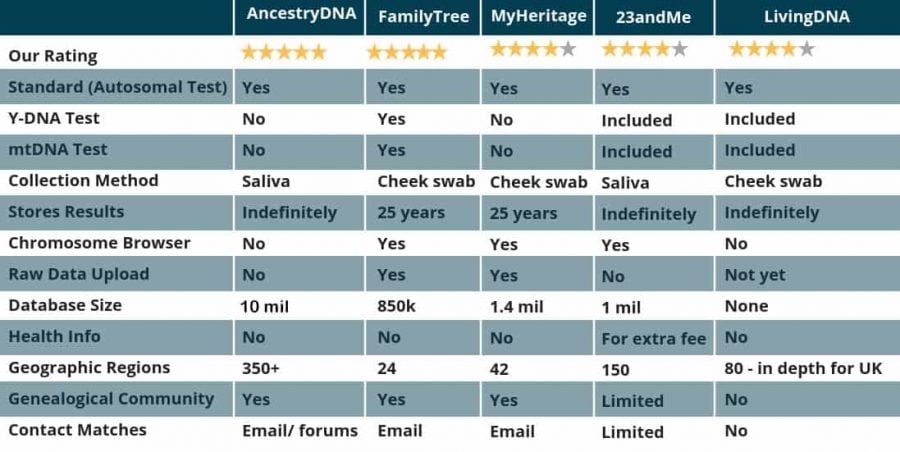
Comparison Checkpoints




Standard
(Autosomal Test)
Y-DNA Test
mtDNA Test
Collection Method
Saliva Sample
Cheek Swab
Cheek Swab
Saliva Sample
Cheek Swab
Stores Results
Yes, Indefinitely
Yes, Indefinitely
Yes, for 25 Years
Yes, for 25 Years
Yes, Indefinitely
Chromosome Browser
Raw Data Upload
Not yet
Database Size
10 mil
1 mil
1.4 mil
850k
None
Health Info
For extra fee
Geographic Regions
350+ From Around the World
150, Includes All Major Regions
42, From All Around the World
24, Most Regions Represented
80, Focuses More on Regions in the United Kingdom
Genealogical Community
Limited
Contact Matches
Anonymous email/ forums
Limited
Result Time
6-8 Weeks
6-8 Weeks
3-4 Weeks
Depends on the Test, 6-8 Weeks is the Maximum
10-12 Weeks
Family Tree Software
Imports From Other Services
Export Results
Our Experts
To create the the ultimate guide for DNA testing, we consulted with some of the top experts in the field.

Dr. Arthur Millius
Ph.D and Genetics Expert
Dr. Arthur Millius graduated in
2005 from Rice University with a B.A. in biochemistry and a B.S. in biophysics. He got his Ph.D. in cell biology in San Francisco in 2011 at UCSF. Dr. Millius’ current research is very focused on DNA. He has direct experience working with consumer DNA testing products, and has a unique perspective on how they’ll develop in the next few years.

Dr. Isabelle Nadeau
Ph.D and Genealogy Expert
Dr. Isabelle Nadeau is a Ph.D scientist, genealogy enthusiast and DNA testing expert. She is also the owner of her own performance nutrition coaching business, which gives her a phenomenal understanding of how our genes affect our diet, and vice versa. Dr. Nadeau also has a great understanding of family history research products and how they tie into the DNA testing market.
AncestryDNA
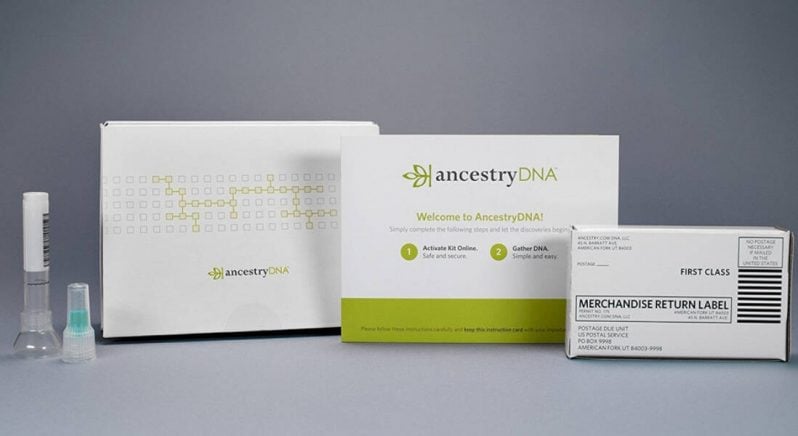
AncestryDNA is our choice for the best dna testing kit for ancestry. The highlighting feature of AncestryDNA is that the service allows you to connect your DNA to your family tree and that of others using its exclusive online services. It has the largest database and allows you to build your family tree and connect to others.
AncestryDNA is one of the most popular testing kits on the market. It is reasonably priced at $99 and one can often find specials running, especially around the holiday season. We felt that it did not give you as much information as some of the other companies, but it allows you the awesome capability to link to your family tree. In order to do this, you have to purchase a separate subscription to Ancestry.com, which is not included in the DNA testing kit.
The only problem with this model is that we felt the information that you received from the DNA testing kit was just a teaser and got really interesting when you purchase the Ancestry.com membership. However, we understand that the subscription service for Ancestry is such a good business model and the membership is only $19.99 per month. Theoretically, once you get the information that you want, you can cancel your ancestry information, although they encourage you to keep paying for your membership because new information is continually being added to their database.
So is the price of the DNA kit and the upsell cost to Ancestry.com worth the price? We definitely think so. After trying out the service, the family of one of our writers at DNATestingGuides has done extensive genetic research on Ancestry.com and found an incredible paper trail on their father’s side of the family. They found several prominent historical figures in their family, some of whom had political ties to George Washington. It was only through Ancestry that we found the migration patterns on their Dad’s side of their family. This lead to the discovery of the extensive political career of the our writer’s ancestors. Not only were they able to pinpoint ancestors fairly accurately on a European map. They also were spot-on in terms of the region where they settled in the United States. It was impressive.
Since the extensive family tree on Ancestry.com that was already mapped out, this made it convenient for testing out all of the bells and whistles of the AncestryDNA test. Using a combination of the DNA information provided, and the family tree that was already uploaded, we were able to accurately see when and where individual ancestors immigrated to the United States and where they went after that. It’s a terrific and heartwarming anecdote to show the value of AncestryDNA over some of the other testing services out there.
One interesting feature of this website was that it matches you to relatives, but you can only see how you are related if they also choose to make a family tree. The DNA Circles feature shows connections between individuals and family groups who share similar DNA to yours. This allows you to find other branches of your family who you do not necessarily share DNA with, but who also stemmed from common ancestors. This goes beyond what traditional DNA matching can do and is only possible because of the extensive database connected to the Ancestry website.
For instance, you might discover another branch of your family tree that stems from a different brother or sister of a common ancestor. These other descendants may have inherited different parts of the common ancestor’s DNA from your branch of the family tree. They are still related, but this goes back to what we discussed about how sometimes only a bit of a person DNA gets passed on, but not all of it. This reflects the random nature of biology and genetics. It is possible to have a common ancestor, but not share, DNA. For the avid genealogy junkie, this was a feature that we just could not resist.
Perhaps one of the worst parts about the way AncestryDNA combines its genetic data and the ability to find out specific information about your family tree is that it was addicting. It is very easy to get sucked in to spending a considerable amount of time finding out the story of you. This DNA testing website had to be ranked number one because of its proven accuracy using known family tree information, the way it is presented, and the vast amount of information you can glean from its extensive database. For the price, we think that this one is the best value and the one that you will have the most fun with in the future.
PROS
- Ability to build a family tree and connect with others
- Reasonably priced
- Draws information from an extensive database of over 10 million DNA results for comparison
- Provides message boards where members can connect anonymously
- Stores your information for an unlimited time
- Respects member privacy
- Ability to import your results to other sites to obtain more information about your DNA
- Affordably priced for the benefits and access to information that you receive
CONS
- Have to buy separate Ancestry.com subscription to build a family tree
- Requires a subscription to continue to use the online family tree
- Members can opt of sharing results, which may limit matches
- Does not allow data uploads from outside sites
- Does not offer separate paternal and material tests
- The information from the site may be difficult to understand for those that are not seasoned genealogists.
MyHeritageDNA
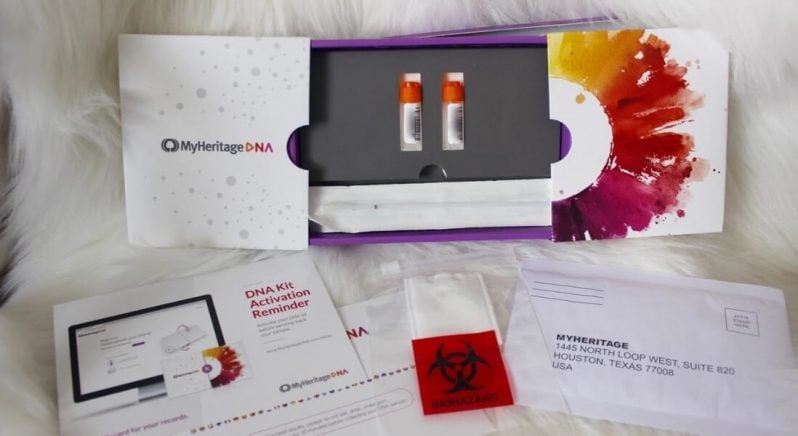
This site has a large database and allows you to connect to other users who may be in your family tree. You can access results for more than 40 regions around the world.
MyHeritageDNA was our second pick for several reasons. First off, they have one of the largest database of all of the top five that we finally chose. They test 690,000 genetic markers and cover 42 geographic regions. They do have family tree integration, but it is not as extensive as what is offered by ancestry.com. They are getting there, but Ancestry has been around a little bit longer and has been able to build up their database more.
MyHeritageDNA runs at about half the price of AncestryDNA, but they also do not have as extensive database. If you are looking for a service that is less expensive but are not ready to take the leap into a full priced version of Ancestry.com and its tests, this might be a good place to start. It will give you a good amount of information, but you are not able to track as specific of information and trace it to your family tree as with our number one pick.
This testing service was started in Israel in 2003 when these types of testing services were first becoming popular, it was probably the number one ranked DNA testing service. It has the second largest database and around 80 million users around the globe. One of the things that makes it different from the information found on AncestryDNA is that the database for ancestry focuses on North America and is particularly good for people with European ancestry who migrated to North America. The users of MyHeritageDNA are scattered more widely around the world. Therefore, their focus is not on a specific type of heritage or area of the world. They have nearly 35 million family trees on their website and counting. They also offer over 6 billion historical records that can help you match the DNA findings to specific events, times, and places.
Like the other DNA testing sites, MyHeritage allows you to see which parts of the globe your ancestors came from. As you browse where your ancestors are from, the site delivers background music that is relevant to those regions and countries. This was a nice touch for a while, but it can get annoying after a time and there is no way to turn it off. Some users may enjoy this immersive experience more than others. For us, we found it easier to turn the volume down and play your own music.
You can then navigate to an area that gives you the percentages of where your DNA is from. However, as we discussed in the information leading up to this final review, these results should be taken with a grain of salt due to differences in DNA testing, which genes are tested, and genetic drift among haplogroups.
This site also has a section of your report that allows you to see your DNA matches. The number matches that you have can range up to the thousands, or less than 100 depending on the information that the database has about your relatives. We found that certain ethnic groups have more information available in this database than others. However, it is not as singularly focused on European ancestors who migrated to North America as the AncestryDNA site. Depending on your specific family history, you may find more information on Ancestry.com, but this is not always the case.
The information on MyHeritage will help you find who your third or fourth cousins are and to what confidence level the match can be certain. It also includes the percentage of DNA that the two of you share and the number of shared DNA segments. It also gives you information about people that are smart matches and appear in both of your family trees. This can help you find common ancestors. It also links to shared ancestral surnames, shared DNA matches, pedigree charts, shared ethnicities, and a chromosome browser.
One thing that we did not like, but which was similar to Ancestry’s plan, is that they show you a quick preview of this information, and then encourage you to subscribe to MyHeritage to gain access to the full amount of information available. They presented teaser with hopes up selling you to their full version. You have to pay extra to gain a higher level of information. This was a little annoying, but many DNA testing sites are beginning to adopt this strategy, so if you want detailed information, you will have to be willing to pay for it.
One thing that we did like about MyHeritage that made it stand out is that it has a strict privacy policy. They do offer the option to download your broad DNA data, which is a service that is not offered by many other DNA testing sites. You can also choose to delete your DNA dated thereto. This is something that we did not find on any other website that we’ve looked at. They give you more control over your data and which part of it you decide to make available. They do all of this using a secure download link that they sent to you in your email. This is important because you may not know that if you forget to log out of a website, it is possible for hackers to go in and download the data that you input onto these pages. We felt that this DNA testing site went the extra mile to keep your data safe.
One thing that we really liked about MyHeritage is that the extra premium features were affordably priced at $6.88 per month. For this small amount they give you up to 2500 slots for your family tree, a family tree builder, smart matching, and access to the collections of other members on the site. It also gives you access to over 6 billion records including birth, marriage, death, senses, burial, military, yearbooks, immigration, and scans of many original documents. Even though you have to pay extra for these services, we felt that this was a very good deal and affordable to a majority of the people. By comparison, Ancestry.com gives you access to 20 billion records and over 100 million family trees, but it is also $19.99 a month. When choosing between the two services, it all comes down to how much you want to spend and how serious you are about having access to a bigger amount of information. We felt that MyHeritage was a good value for the price.
PROS
- Large database
- Reasonably priced
- Free mobile app
- Free to contact matches
- Allows upload of data from other sites
- Provides information for 42 regions
- One of the best sites for users that are not located in North America and looking for their European ancestors
CONS
- Does not do YDNA or mitochondrial DNA in basic test, you must pay extra
- Slower delivery than other services
- No Native American community records
- Provides no health information
- Has a relatively small database, with only a little over a million test results
- The information that you receive is limited and unless you buy a premium subscription with add-on features
23andmeDNA
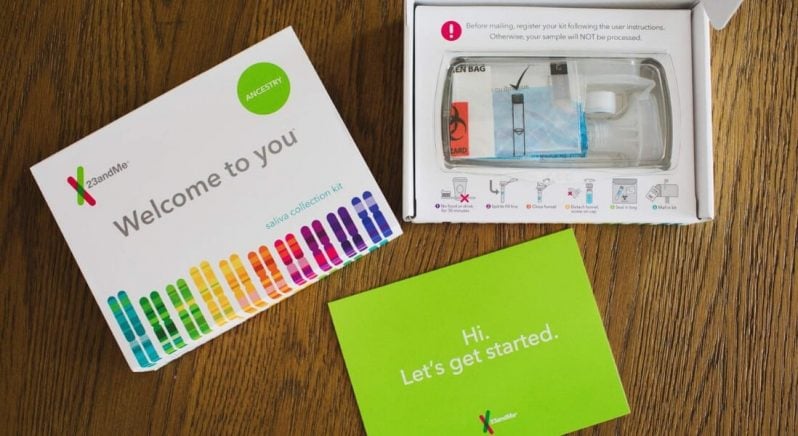
This was one of few testing kits that allowed us to run a limited amount of health information. It tests for a larger number of chromosome markers than any of the other tests and provides more detailed information.
We were quite excited to try DNA test from 23andMe because this is one of the most popular DNA testing kits on the Internet. We felt that for the price this website offered was fair ($99) and it appears to be discounted during holidays as well. With some companies, all we received was an interactive map of the ethnic heritage. This company does that too, but it also provides detailed information for an interactive diagram of your chromosomes. It actually shows you which parts carry a certain ethnic ancestry.
In addition, if your mother and father also take the test, you can see how much and which parts of the chromosomes you inherited from them. For instance, you might find that your mother contributed 0.2% of your DNA and that it comes from a certain area of the world and is located on a specific chromosome. This chromosome matching feature was a lot of fun, but the question is whether it is accurate.
Our writers who have tried this test all also have agood idea of at least some of their family tree with substantial documents to prove it. For the most part, the information sent by this website matched what was known about the family tree through other information. One thing that we noticed is that everyone seemed to have at least a little bit of Neanderthal heritage. This website gives you a scoreboard of where you stack up in terms of Neanderthal genetic variants. The company does not test for all the and earth all variance, but it does include some interesting ones, such as those that are linked to straight hair, black hair, height, and certain food allergies.
Like the other companies on this list, it also provided information from Y DNA and mitochondrial DNA to trace the migration patterns of your ancestors from Africa to present. Unfortunately, they do not currently have a way to build your family tree and explore your relationships to other people with matching chromosomes further. It only gives general information.
Frankly, this was the company that we had the most fun with because it provided some interesting information in a format that was easy to understand. In terms of accuracy, they seem to hit the known family histories fairly close to the mark. There were only a few surprises and in these cases the person said that they were at least a possibility. We felt that this kit was a very good value for the price.
PROS
- Fairly expensive, but very detailed
- Shows more detailed information about your genetics
- Provides fun information
- Uses Y DNA and mitochondrial DNA to trace migration patterns from Africa to present day
- Graphics and information is presented in a way that is easy to understand
- Includes a chromosome browser
- One of few sites to offer health information
- Stores your information indefinitely, so you have access to it in the future
CONS
- Does not allow you to build family trees
- Limited database with only about results from approximately one million available, even when premium package is availed
- Limited ability to contact matches that are found
- Does not allow the upload of data from tests conducted on other sites
- Difficult to find matches due to small database
- Access to health data requires extra fee
FamilyTreeDNA
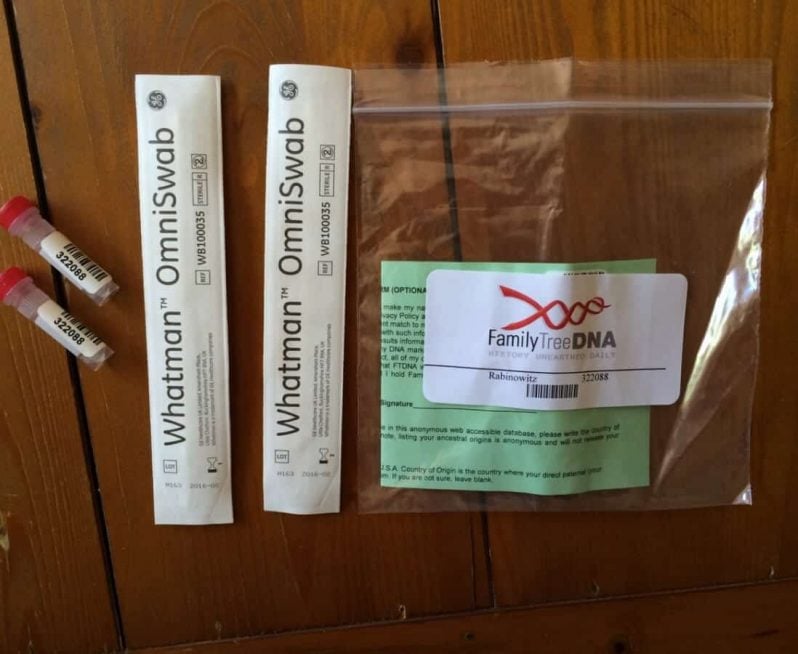
This company will help you connect with family members all around the world. It has a large database of registered users.
Family tree DNA uses autosomal testing and does not examine the sex-linked X and Y chromosomes. You can get this information, but it will cost you extra. We felt that the basic analysis was fairly priced at $79. However, what you got for the basic price may not give you the answers that you are looking for, and they do upsell you to get the add on information that is found on the X and Y chromosomes.
One thing that we liked about this service was that it allowed you to build a family tree by incorporating your personal DNA tests and matches from the site’s database. By doing this, our writers found nearly 2,000 potential relatives. They were making jokes about how it’s going to be impossible to do holiday shopping from now on.
One of the features that we liked about the results presented by this test is that they include a chromosome viewer. This lets you see the exact gene that you have in common with a certain relative. It allows you to view up to five relatives at a time. They also have a tool that allows you to trace your DNA from a shared ancestor.
One of the members of our team found that when their DNA was compared to ancient Europeans, they may have been related to Ortzi the Iceman, who lived over 5000 years ago and whose body was found in the Italian Alps in 1991. Using the DNA data, it was also possible to see how this person DNA was influenced by invaders from the steps that are now known as Mongolia. Until this test, this person never knew they had Mongolian ancestry.
What is fun about this company and the DNA information that they can provide is that they have DNA sequences from some famous people and from archaeological finds. Information such as this can certainly give you some interesting topics for conversation. The reason why we ranked this company lower in our top five is because the information was difficult to use and understand.
PROS
- Basic analysis reasonably priced
- Includes information in family trees
- Stores results for at least 25 years
- Provides results for YDNA, mitochondrial DNA, and autosomal DNA separately
- Allows you to connect with your matches
- Allows uploads of data from other companies
- This site is easy to navigate. It presents the information in a way that is easy to understand, even for those who are new to tracing their genealogy.
CONS
- Costs extra to get Y DNA and mitochondrial DNA analysis
- Does not explain results completely
- Does not have as many users and as large of database as some of the other sites
- Does not provide health related marker results
- Does not store information for long as other companies, which means you need another backup source if you want to access the information later, or send it to a third-party.
LivingDNA
This test allowed the ability to pinpoint the region from which your ancestors came more precisely, especially for those in the British Isles.
LivingDNA made the list, even though it is one of the more expensive testing kits, at $129. The company claims that they can pinpoint exactly where a person’s roots come from in the British Isles. The company first presents you with your ethnicity on a world map and then lets you zoom in to a more exact location at the continent level.
In the case of one of our team members that took this test, they had Scottish relatives that we know came from the Loch Fyne area in Scotland and migrated to America in the mid-1700s. Their family has a fairly convincing paper trail to support this. This area is located on the west coast of Scotland. Surprisingly, this DNA test was pretty convincing because it pinpointed their ancestry to the West Coast Scotland in about the area where we know their ancestors came from. Several others have reported that this company came close to pinpointing the location of their ancestors in the British Isles.
Living DNA uses the ability to pinpoint ancestors in the British Isles as one of their main justifications for their high price. Overall, I was impressed by their ability to pinpoint my Scottish ancestors.
The company claims that by using mitochondrial and why DNA it can trace both your mother’s and father’s lines back to early human origins in Africa. They can show the bite migration patterns and where your line probably branched from the original motherline as far back as 19,000 to 26,000 years ago.
We were impressed with the database and its ability to provide price size matching in the British Isles. However, we feel that it may not be worth the price tag for those whose line does not contain a strong ancestry in the British Isles are Ireland. In addition, they do not allow the ability to link relatives to a family tree. They say that they are working to add these features and to improve their ethnicity pinpointing abilities in Germany and elsewhere.
We included LivingDNA on the list because of the potential for it to become a very precise service in the future. At present, it is little bit pricey and is only good if you have ancestors from the British Isles, which most Caucasians in America half. When they had the ability to link relatives to the family tree and improve their databases to provide more precise results on a global basis, they may become one of the top contenders.
PROS
- Good at pinpointing ancestors in the British Isles
- Uses Y DNA, mitochondrial DNA, and autosomal DNA
- Accurate results in our test
- Provide specific information that matched with historical records
CONS
- Most expensive
- Not strong in other areas other than the British Isles
- Does not provide a way to contact matches and share information
- Not as good for people looking for information beyond the British Isles
- The most expensive for what they have to offer
EXPERT QUOTE
” If you’ve ever opened a book in a foreign language, you can appreciate how daunting it is to interpret what’s written. A DNA test is like having a foreign language dictionary that gives you clues to the meaning of different words.”

DR. ARTHUR MILLIUS
Ph.D and Genetics Expert
What Could You Discover?
The craze over consumer DNA testing is currently being driven by ads on TV, advertisements online, YouTube videos, and many interesting stories about people who found quite a few surprises that they did not expect. Genealogy and discovering one’s ancestry has been popular for quite some time, but the ability to have your DNA tested and find out more precise information is just too intriguing to resist. So what are some of the things that you could find out by having your DNA tested?
Many times, people find out that they have dissent genetic markers for ethnicities they never suspected. Sometimes the results of the test do not necessarily match family histories that had been taken as factual. The test compares your DNA to other people who have taken the test. If there is a known family tree connected to DNA that matches, you might find that you have shared ancestors. In some cases, people have found out that they were related to famous people in history.
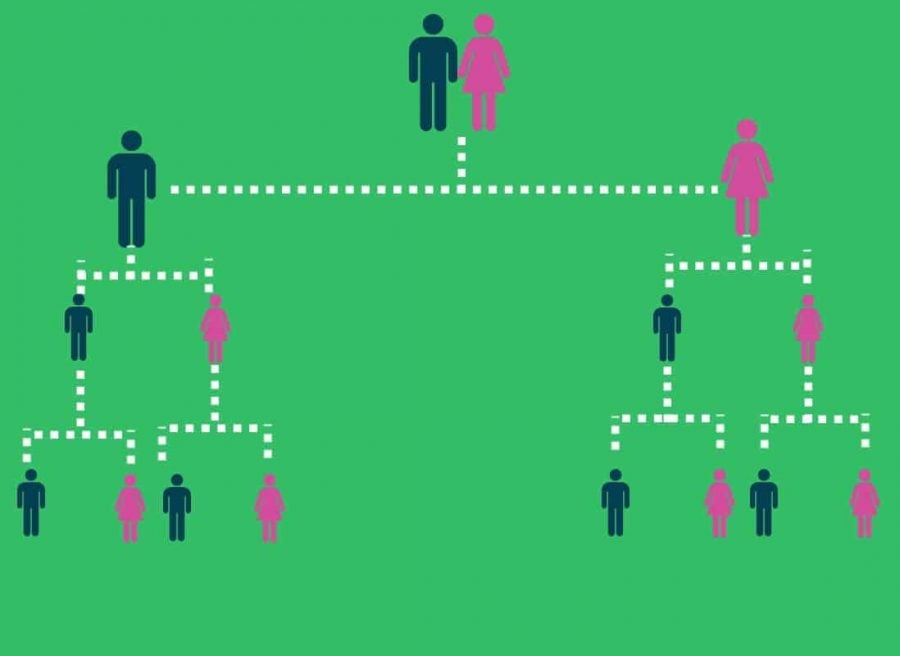
DNA testing ties in with family history more than most of us think.
The AncestryDNA test matches for ancestors from over 350 regions around the world. In some cases, people have been able to discover entire missing family branches of people they never knew they were related to. Sometimes, when they met the similarities were uncanny.
In cases of adoption, DNA tests may be the only link that a person has to where they came from and what ethnic groups they are connected to. These tests have also help some people find their parents. This can be important for more reasons than just curiosity or to mend family relationships. Sometimes it is important to know family history and its connection to health. However, there is a caveat for using genealogical DNA testing for this reason, which will be discussed later in this article.
Sometimes people have discovered that they were related to people in their life, such as people they worked with, and they never knew this before. This has happened with neighbors too, sometimes with some very surprising results. For instance, people with more African-American features have found out that they were cousins with people who have distinctly Caucasian features. This is one way that DNA testing has served to bring the world closer together. The more we find out, the more we find out that we have in common. You never know what your DNA test results will reveal about you.
What Can A DNA Test Reveal About You
- Lost family members
- Family secrets
- Your unique story
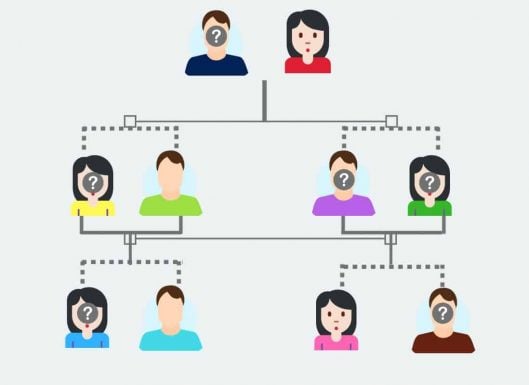
What is DNA?
Before we get into what DNA testing can do and how it works, let us first delve into understanding what DNA is. DNA is short for deoxyribonucleic acid. It is found in every living cell in every creature on earth. This is a chemical chain that serves as the instruction manual that tells our cells how to grow and what function they should perform. It also contains information on how to perform that function.
There are only four chemical bases that make up the DNA chain. These are adenine, guanine, cytosine, and thymine. DNA consists of groups of combinations of only these four chemical bases. These groups of chemical bases are called genes and are arranged in a double helix shape that looks like a twisted ladder.
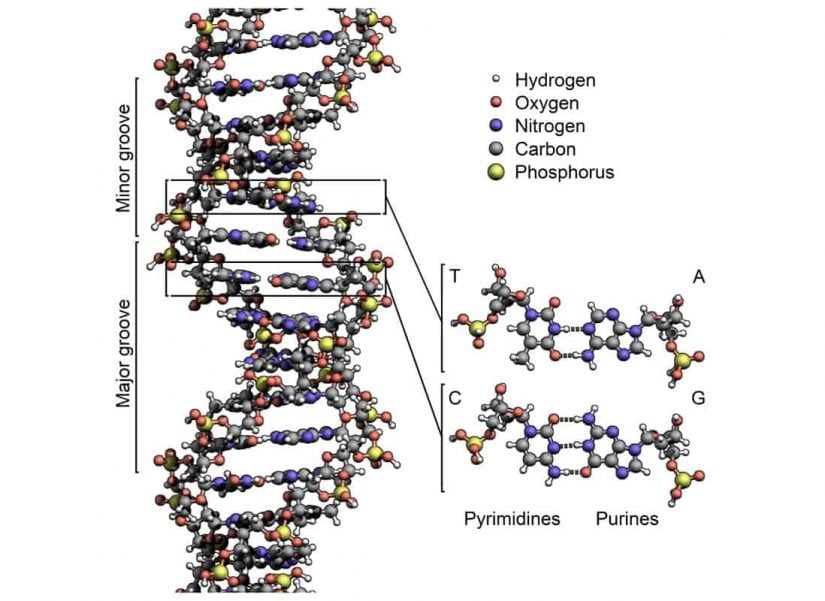
Human DNA consists of about 3 billion different bases and over 99% of them are the same on everyone on earth. The order in which these chemical bases appear is what codes the information, much in the same way that letters appear in a certain way form words that can be understood and read. The DNA is like a bunch of words that tell the cell what to do and what to be. Sometimes they contain special genes that will tell another sequence to turn on or off.
One of the most important characteristics of DNA is that it has the ability to make a copy of itself. Each half of the strand of the double helix can serve as a pattern that is able to make an exact copy of itself. This works because only certain pairs of bases can be combined together. Each set of bases contains one sugar molecule and one phosphate molecule. Adenine always pairs with thiamine and guanine always pairs with cytosine.
To visualize how DNA copies itself a little bit better, when you consider that there are only two possible combinations of the four chemical bases, it is easy to see how DNA knows how to rebuild itself and copy itself. For instance, if the strand is unzipped and a thiamine base is present, then only and adenine base can attach to it. Similarly, if a cytosine base is present, the only thing that can form and attach to it on the other side is a guanine base. The entire helix is bordered and held together by an outer backbone that consists of sugars and phosphates.
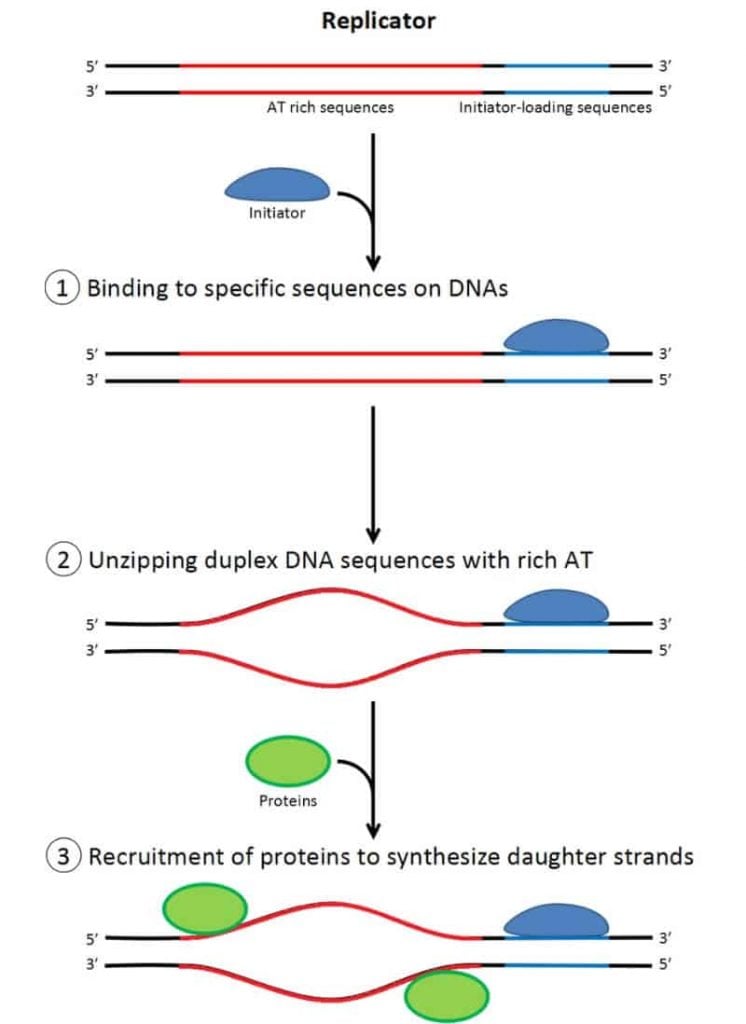
A gene refers to a group of a certain sequence of base pairs. These gene pairs can range from a few hundred DNA base pairs to genes that contain over 2 million bases. Recent data from the Human Genome Project has found that humans have somewhere between 20,000 to 25,000 genes of various lengths. This means that genes and the code that they carry is much like reading a sentence with words of various length to convey a specific meaning.
Each person has two copies of each gene. One of them is inherited from your mother, and the other one from your father. Less than 1% of the total number of genes in the human genome are different in people. These gene pairs only have small differences in the sequence of the DNA bases that make them up. This very small number of genes determines your unique physical features, health conditions to which you are prone, personality traits, and other characteristics that are genetically based. The other 99% of your genes is just like everyone else’s on earth.
To keep track of genes, different names have been assigned to them. Some genes are also assigned symbols that consist of letters and numbers. For instance, the gene that is associated with cystic fibrosis is scientifically known as cystic fibrosis transmembrane conductance regulator, or CFTR. However, it is commonly referred to as chromosome 7. The same would apply to the gene that determines whether you have brown eyes, or when your hair may begin to turn gray. This will come into play when we discuss the different names of genes that are associated with people from different parts of the world.
In the nucleus of every cell, the DNA is tightly coiled around proteins called histones that serve as a supporting structure. These structures can only be seen when the cell is in the process of division. Each chromosome has a specific shape with a constriction point in the middle that is off center. This produces a long arm and a short arm. This gives scientists a way to describe the location of a certain gene. The chromosome is sort of like a mapping system that can help give information about where a gene should be found.
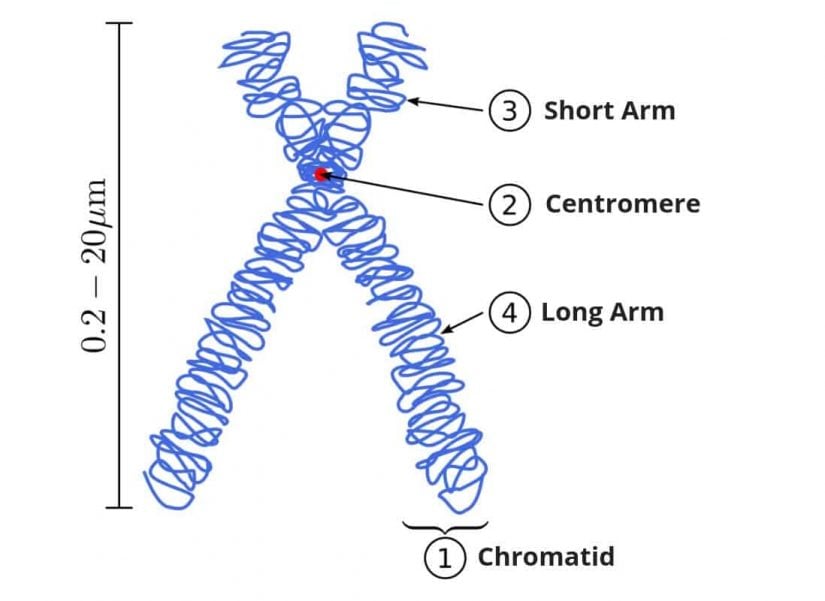
Each cell in your body contains 23 pairs of chromosomes, which equals a total of 46. Whether you are male or female, 22 of these pairs look the same. However, the 23rd pair is different in males and females. Females have two copies of the X chromosome and males have one X and one Y. One example of a mutation that can occur is Down Syndrome, which is caused when the 21st chromosome tries to make an extra copy of itself. Every human trait imaginable from eye color to the length of your thumb is the result of a mutation that occurred sometime in human history.
If the DNA in each cell in our body were unwound, it would be about 1.8 m long. When the cell divides to make a new cell, the DNA unzips itself into two separate halves and makes an extra copy. This is the process by which genetic traits are passed on. The passing on of these traits is the basis for DNA testing. Through the collection of years of data, scientists have been able to group people according to the types and number of genetic mutations that they have. This allows them to trace where certain gene mutations come from in a population. Once they know this information, they can take and individual DNA sample and compare it to known groups. When they find a match, this is where tables of ethnicity come from when you order your information from a company that does DNA testing.
Most of our DNA is the same. But certain strands cause massive distinctions in our personalities and appearance.
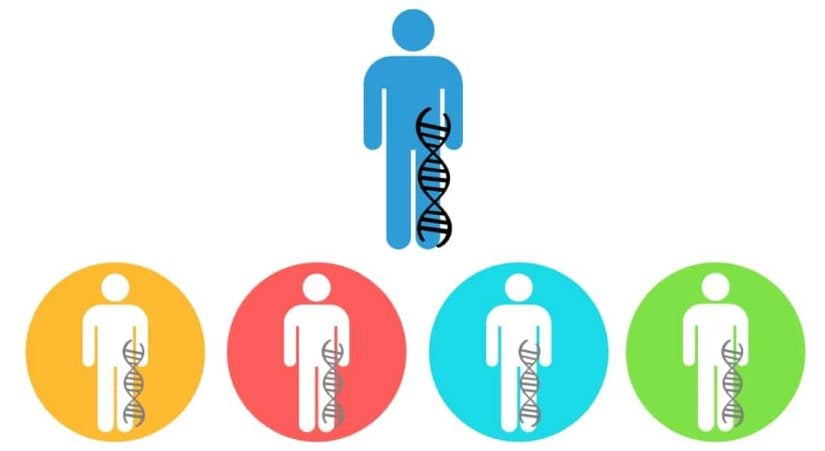
There is a little more to the process and how it works, but this is the basics to help you understand how DNA testing works and how to pick the best DNA test kit.
EXPERT QUOTE
” AncestryDNA tends to focus on ethnicity and genealogy, while 23andMe has been more health-focused from the start. The reports might differ in how they predict your ancestry, they might be using different algorithms that could give rise to different probability pattern in your genealogy. “

DR. ISABELLE NADEAU
Ph.D and Genealogy Expert
Understanding Genealogical DNA Tests
The roots of genealogical genetic testing began in the field of medicine for the purpose of discovering the presence or absence of certain genetic conditions. It later developed into a tool for assessing the potential risk of a person developing a certain medical condition. Although our genes hold such information, genealogical testing is not primarily used to diagnose disease, and companies offering such services are told to refrain from offering health related information to clients by the US Food and Drug Administration. People use it to find branches of their family that may have been lost, distant cousins, or to find out interesting information, such as if they are descended from a famous person in history.
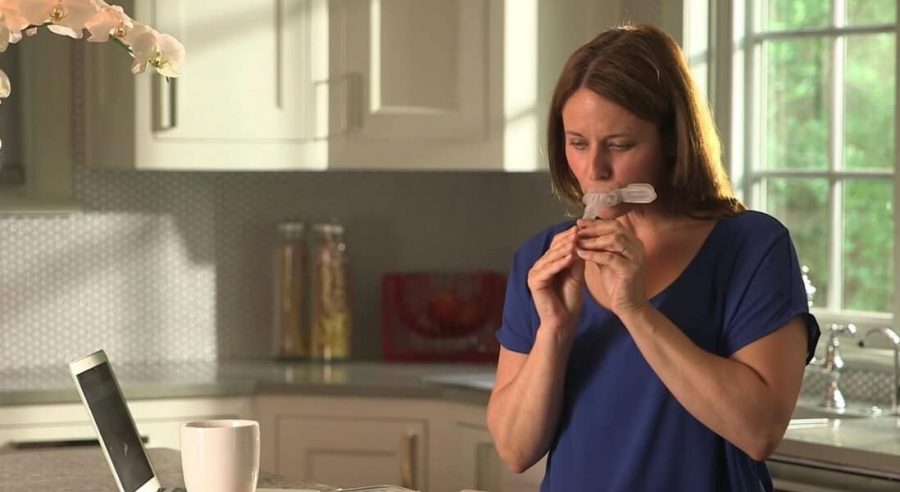
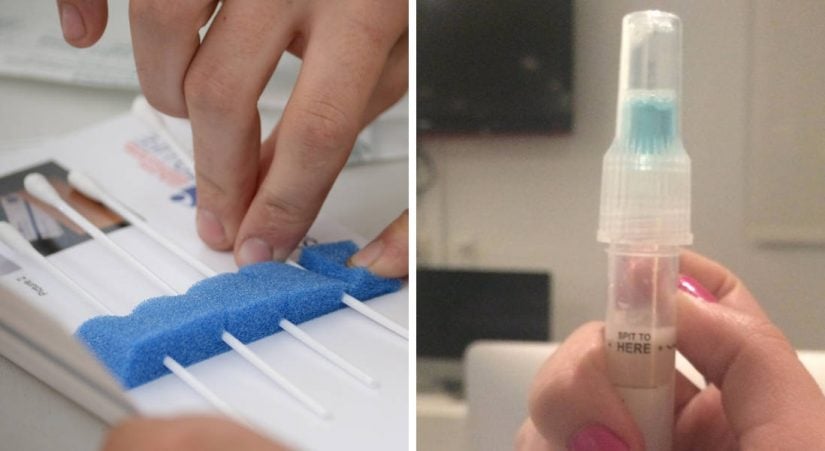
The test process is simple. All you do is order a kit, collect the sample of saliva according to the instructions, send the sample in, and wait for your results. The results of the test will give you information about your ethnicity, people you may be related to, and other information about your family history that may be interesting.
Once your sample arrives at the lab a little bit of your spit is loaded into a robotic machine that then isolates your DNA from the sample. It then performs a sophisticated analysis that looks at over 700,000 sites in your DNA that are known to be tied to certain areas and regions of the world.
Adding your saliva to a DNA testing kit is easy and simple.
The sites are known as single nucleotide polymorphisms, or SNPs. These SNPs are all little changes that have taken place over time in our DNA that make us unique from everyone else in the world. The lab then compares the SNPs from your sample to samples from people that have been collected all around the world. These samples are stored in a database and a computer makes comparisons between your sample and samples from all over the globe. It looks for matches that connects mutations in your DNA to mutations that have occurred in groups of people from that region.
It is this database that makes the biggest difference in the results and is the reason that different genetic testing results from different companies differ from one another. Some companies like AncestryDNA use larger databases and have access to more information than others. In addition, some laboratories are better than others at running the tests, have different types of equipment, and different quality assurance protocols to make sure that cross-contamination of samples does not occur. These are some of the main differences that can affect the results from different genealogical ancestry testing.
Why Are My Sibling’s Results Different?
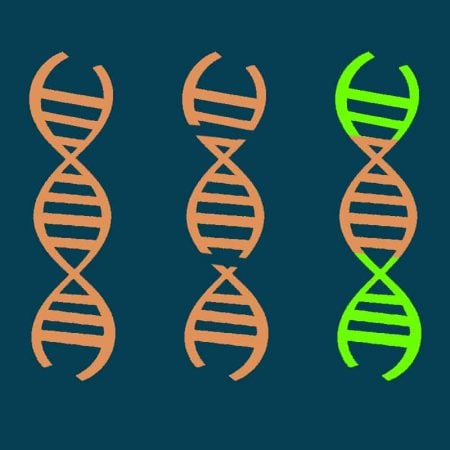
If you have taken a DNA test, and your sibling was also tested, there is a possibility that the results you receive may have different ethnicity estimates. We inherit half of our DNA from each of our parents. During the replication process the DNA literally unzips itself, makes a copy of one half, and then connects to the other unzipped and copied half of the DNA from the other parent. This process sounds simple, but it is actually rather messy and complicated.
Sometimes there are mistakes in the unzipping process or the copying process and the DNA does not copy exactly. It is sort of like a real-life zipper that gets stretched on one side and does not quite line up with the other side anymore, making it quite bothersome. Sometimes certain sections do not copy at all, in which case the DNA has a process for filling in the gaps. Certain sections of DNA can be transposed and connected to the wrong opposite section.
These are random events and the way your DNA copies may be completely different from how your siblings’ DNA copies. It will have different mistakes and errors. This is why, unless you are identical twins, you and your siblings can look entirely different. This is why you may have red hair and your brother has brown hair, or perhaps you have different colored eyes. You will also probably be the first to admit that you have different personality traits too, even if you were raised by the same parents in the same environment. All of this is a result of the imprecise process of cell division, DNA replication, and the mutations that are responsible for every human variation on earth.
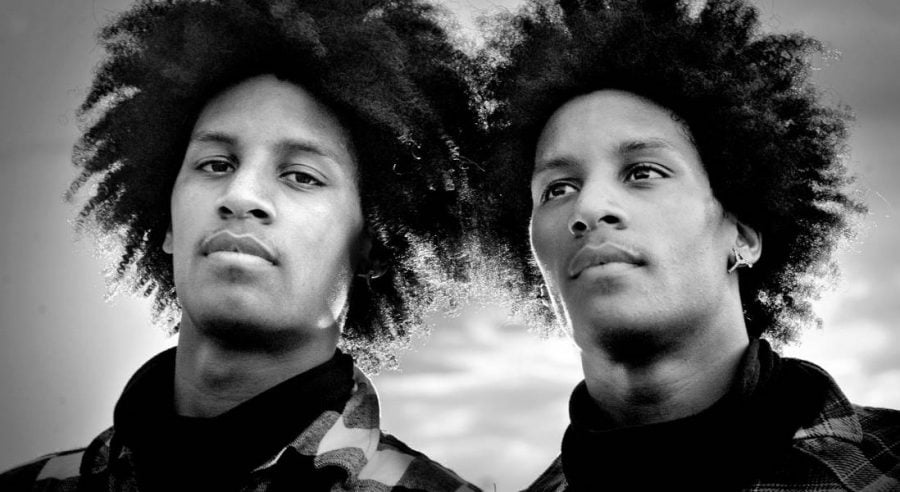
This is why sometimes the DNA test results for two siblings do not match. It is possible for siblings to have such variation in their DNA that their ancestry testing results would make them look like two unrelated people. This brings up another topic: family history and how it ties into DNA testing.
Sometimes people spend extensive time finding records and tracing their family history and then when the test results come back, they do not reflect the findings of all of that painstaking genealogical research.
In some cases, the person is absolutely certain that they are correct about their genealogical research. For instance, they may have grown up with the grandparent that migrated from Germany. They may have documentation and immigration papers and know for certain that they have a certain ancestry. However, when they get their DNA results back, it may show very little German ancestry.
These types of occurrences have caused many people to scratch their heads and shed doubt on the accuracy of the DNA test, but it is actually possible that both are correct. Perhaps it is just that in their particular DNA, the German ancestry did not copy correctly or perhaps was damaged in their own genetic code and the DNA indicating other ethnicities were more prevalent.
Many people fail to understand that biological DNA makeup may be different from genealogical research. However, there have been cases where the DNA was proven to be correct and the genealogical research was proven to be in error. If such an occurrence happens when you receive your DNA test results, and you are absolutely certain of your heritage, it may just be that you did not inherit those traits from that side of the family as strongly. It is possible for one sister to be slightly more Irish than the other, even though they have the same family tree and history. This is the very essence of human genetic variation and how we have evolved from our primitive ancestors into what and who we are today.
Can Genealogical DNA Tests Tell About Health?
The answer to this is yes and no. When companies collect genetic data on customers, they collect data on thousands of gene variants, many of which can have an impact on health. In some cases, consumers have ordered such tests in order to find a cheap way to get this information. However, even though the data is available from consumer genetic testing, the USDA will not allow them to disclose certain information, or sometimes they are allowed to disclose limited information. The reason for this is that there has been some question over the accuracy and communication used to transmit the information to the consumer. Laboratories that are certified to do health related genetic testing have to meet a set of strict criteria and licensing requirements. This is not necessarily the case for laboratories that offer their services for genealogical testing only.
Companies have devised a work around to circumvent some of these limitations that are placed on them. For instance, they will allow consumers to purchase their raw data for price, where they can send it off to a third-party laboratory for analysis in the presence or absence of certain genetic markers that could indicate a tendency to develop conditions such as diabetes, heart disease, or cancer.
The problem with this is that there have been many cases where the laboratories that provide such services have given consumers incorrect information. In some cases, this has caused undue worry, and in others it gave them as false sense of safety. In addition, just because someone has or does not have a certain genetic marker does not necessarily mean that the marker will be switched on, resulting in the condition. The field of health-related genetics is more complex than simply having or not having a certain gene.
The field of health and DNA testing is just beginning, but could become a massive industry in the next decade.

In some cases, consumers have ordered a genetic DNA test and had it analyzed for health-related conditions. When anomalies were found, they later got an order from their doctor to have the data analyzed and be retested by a certified lab. In a study that examined this issue, it was found that 40% of the harmful mutations that were examined were false positives. In some cases, the original company knew that there were errors in the raw data, but because they did not intend to use these portions of the data to provide health related information, they did not consider the errors to be important enough to disclose. This is one reason why it is not advised to use genealogical testing as your only source for health related information, even from third parties that offer the services.
Another reason why the genetic DNA testing data is not sufficient for health-related information is because it does not include a full draft of the person’s genome. Clinical testing uses several different methods to examine and then reexamine genes that are related to certain health-related conditions. Clinical testing labs have the ability to determine if sections of DNA have been added or removed from the genetic code.
Companies that do genealogical testing do not scrutinize the data or run such rigorous testing protocols. Genealogical testing only spot checks three or four portions of the code and does not even look at the rest. Furthermore, because of the complexity of health risk factors, the information should be discussed with a physician or genetic counselor who can give specific information about a person’s real potential for developing the disease.
It is a mistake for consumers to assume that the information they receive is complete enough, accurate enough, or meets the criteria for making a health determination. Clinical genetic testing is much more rigorous and must meet strict protocols. It is sort of like the difference between skimming over a chapter of reading and taking the time to sit down and digest it thoroughly and carefully. This is one important caution that you need to know about for ordering your genealogical testing kit.
How Reliable Are the Results?
There is no doubt that you can find out some very interesting information from a DNA ancestry test. Of course, if you are considering doing this, you want a company that can give you the most accurate test results possible. In order to evaluate DNA testing companies, you need to understand some of the factors that can influence the results that you achieve.
As we stated earlier, there are many factors that can affect the results that are obtained. The type of equipment being used, the number of DNA sites that are sampled, the source and size of the database, as well as laboratory procedures can all have an effect on the reliability and accuracy of the results.
There are also other things that can affect the results such as chewing gum for certain period of time before taking the test, how well the swab sample was taken, and what you have eaten within a certain time. Before taking the test. To achieve the most accurate results possible, it is important to follow all of the guidelines for collecting the sample that are sent with the kit.
Several studies have been conducted where people sent their own DNA sample to different companies to see if they received the same or different results. There have also been instances where people sent a sample to the same company twice to see if the results match.
Unfortunately, in some cases when the same DNA sample was sent to the same company several times, the people received different results back. However, the differences were in the percentages of the ethnicities, but the ethnicities themselves matched. This would indicate that they are accurate in terms of the place the persons ancestors are from, but one should take the percentages with a grain of salt.
Currently, there are over 40 companies that are performing family tree DNA testing. They are not keen to share their data, their methods, and how they guarantee their accuracy. For one thing, companies may test different SNPs and use different databases to compare them with. Different companies use common genetic variations as the basis for establishing the probability that a person’s genes are from a certain location in the world. The SNP’s have different frequencies in various geographic locations. This is how the probability is determined. Companies also have different algorithms and formulas for determining these percentages. The difference in the database can make a significant difference in the results that are achieved.
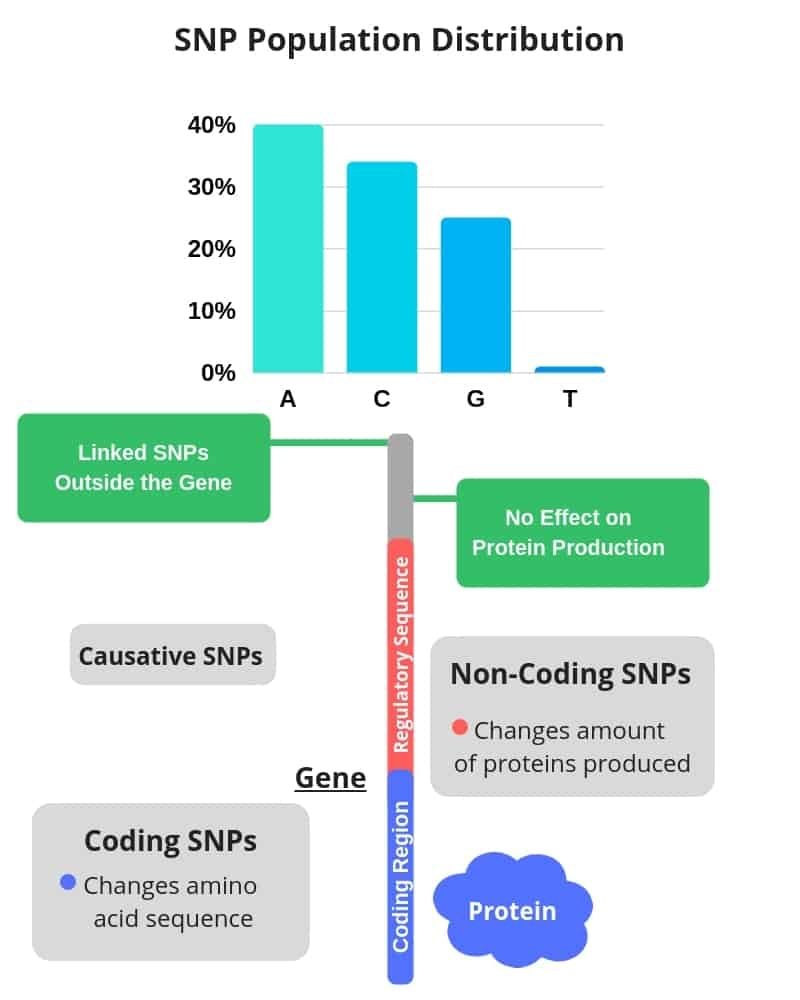
Family history genetic testing only uses a certain set of genetic variations and does not look at the entire genome. This means that the test may not be looking at the entire picture. For instance, if a test says that you are 50% African, it can only report that half of the SNP’s that it looked at in your DNA appear to be of African origin.
There is another factor that also plays into the accuracy of the results. Genetic testing companies sometimes only use information from the Y chromosome, which is your father’s side or mitochondrial DNA, which is your mother’s side. These tests are less accurate because they only really use half of the DNA information that is available. Autosomal DNA testing only looks at certain sites, but uses the entire DNA strand that included both Y and mitochondrial DNA. This type of testing looks at the whole picture, not just half of it. The number of sites that are examined also affects the accuracy and reliability of the reporting results. Some companies were found to test 100,000 sites or less, while others tested hundreds of thousands of sites that are associated with certain traits and mutations associated with different groups.
Companies that use the entire amount of information available from the Y and mitochondrial DNA, as well as a higher number of autosomal sites will be more likely to provide accurate results than those that only use a limited part of the information available. Furthermore, the larger the database, the more reliable the results will be. If this information is available from the company, it should play a major role in choosing which to company to use. Of course, you want to get the most accurate and reliable information for your money. The more reliable companies provide this information and tell you a little bit more about how they run their tests and what they look for.
What Are Haplogroups?
Sometimes people choose to use companies that only use either the Y DNA or mitochondrial DNA. The reason for this is that they are looking for connection to a certain person or group on either the mothers or father’s side. Companies that provide information from autosomal DNA often provide information that primarily focuses on ethnicity and percentages of that ethnicity. It is important to note that companies that use Y DNA and mitochondrial DNA cannot provide ethnicity estimates. However, they can be used to find one’s haplogroup.
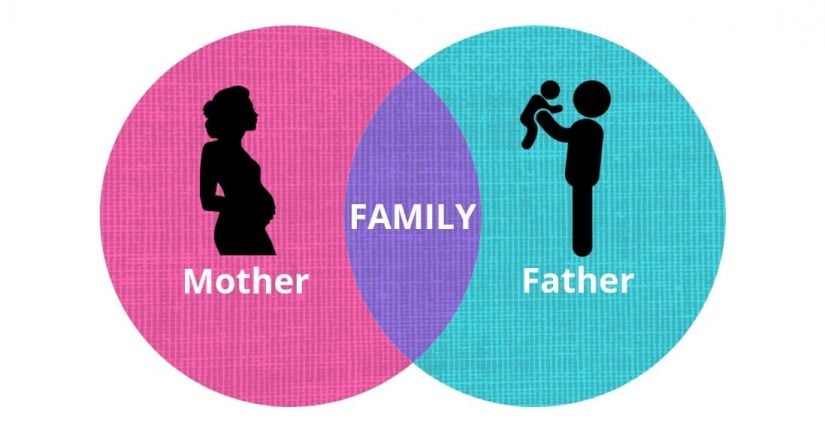
A haplogroup is a group of genes that are inherited as a group from a single parent. People who have inherited a certain haplogroup share a common ancestor that has a single nucleotide polymorphism mutation that is distinct. Do you remember when we talked about all of the things that can go wrong when the DNA from the mother and father unzip, copy, and then recombine into a new organism? This process is where the SNP that connects you to a single common ancestor comes from. If you have that haplogroup, you can be definitively connected to the person that first had that mutation.
Understanding which haplogroup’s your genes belong to traces each of those haplogroup’s back to a single ancestor somewhere in human history. It traces a single line of inheritance of that trait directly back to that ancestry. This makes it possible to predict ethnicity and haplogroup from tests that use only Y DNA or mitochondrial DNA.
This concept seems simple, until you consider the many different cultural encounters and clashes that have taken place over human history. Sometimes there are haplogroups within haplogroups. These can be used to give more specific information about geographic regions, but most the time haplogroup information is only general in nature.
The haplogroup’s that survive today are ones that natural selection has allowed to survive. We know that there have been groups of humans that have come and gone during human history. We also know that sometimes people in modern times find out that they carry their genes. However, as a cultural group, or human subspecies, these people have disappeared from history.
Evolution has changed humans massively in the past 2 millions years.
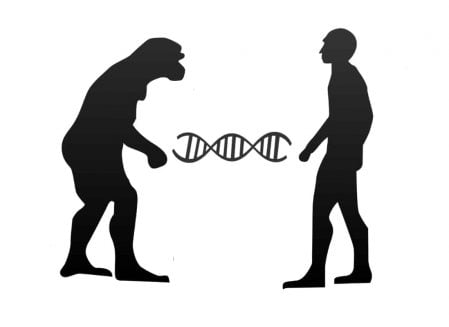
It is assumed that if a haplogroup has survived to the present, that it has remained relatively unchanged through time. There is a little bit of random fluctuation that can occur, but in general, long surviving haplogroup’s can be isolated and identified.
Genetic drift and variation tends to be more stable in larger populations that tend to avoid interim mixing outside of their own group. Genetic drift tends to be more prevalent, and therefore the haplogroup less stable, and smaller cultural groups that interbred with other populations more frequently. The lineages that exist today are a reflection of the full genetic variation of older, more stable populations.
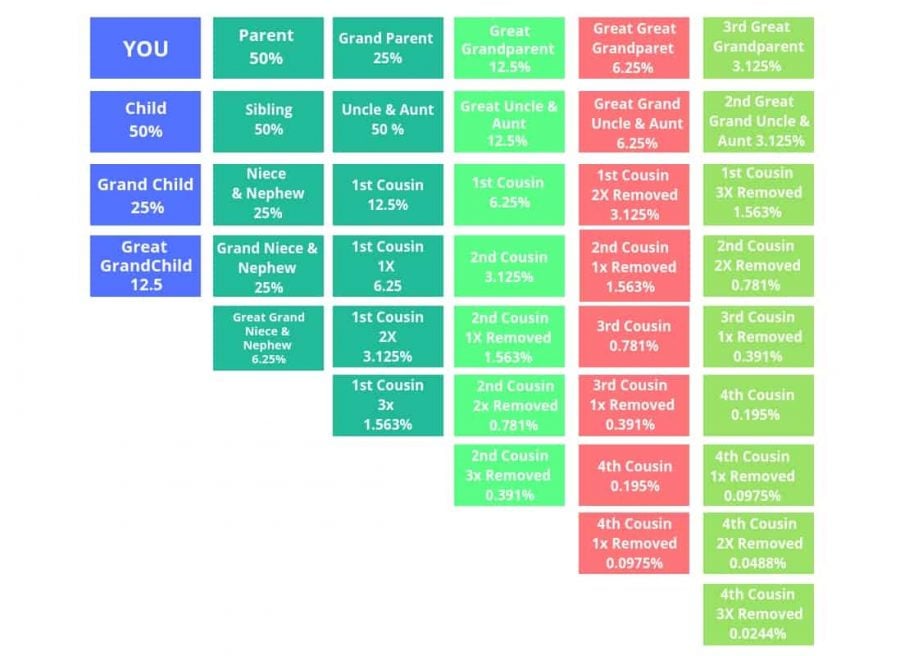
Some companies that only use Y DNA or mitochondrial DNA will provide charts that are similar to those that use autosomal DNA information. They will provide charts that estimate ethnicity. It is important to understand that these charts are only based on half of the information and cannot be considered accurate. It is difficult to estimate ethnic percentages using only one half of the information. These ethnic percentages will only apply to the father’s side or the mother’s side, depending on which half of the DNA was used to obtain the results. This is a caviat that one must be aware of when choosing a DNA testing company.
To identify a haplogroup, the company looks for the presence of certain mutations that are known to have occurred in that population. The level of information available today is quite complex, but here is one example. Haplogroup mutations were a result of genetic drift and the mixing of different groups of people, which occurred largely along coastal areas if one goes back to the early beginnings of human history.
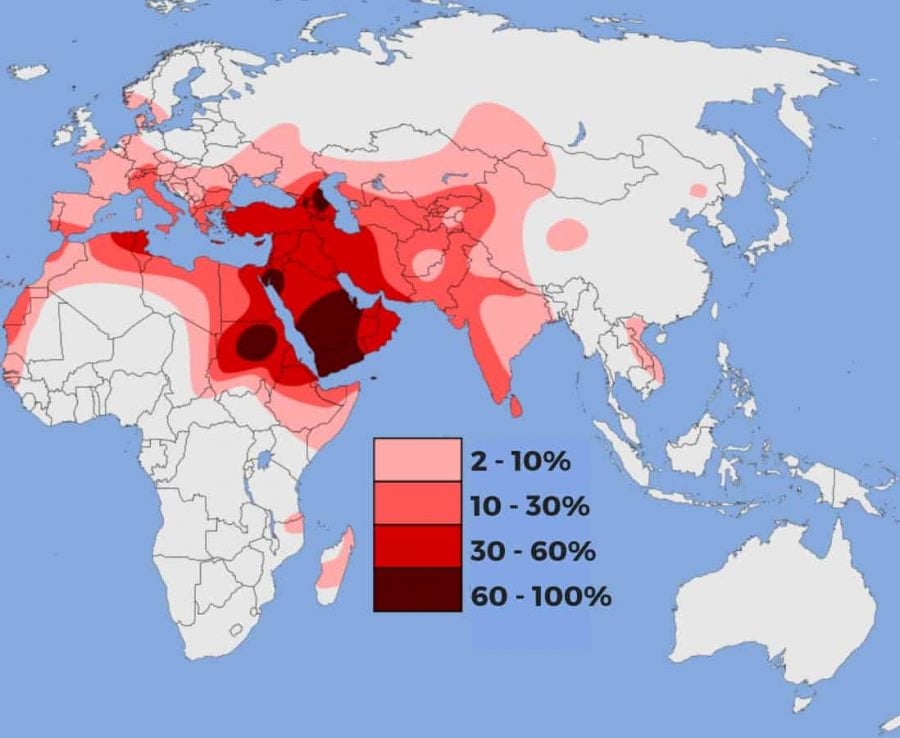
Here is an example.
Some groups are described as having a mutation known as M168. Groups with the M168 mutation include African populations. This mutation is not found in populations from Southeast Asia, Western Asia, North America, Asia, or Europe. If a person has mutation M168, they have an ancestor from Africa somewhere in their family tree. Likewise, if mutation M168 is not found, there is a good probability that they do not have any ancestry from that area. However, if the test was conducted using only Y DNA, this means that they do not have any ancestors are from Africa on their father’s side but this does not tell them anything about potential African ancestry on their mother’s side.
One common error that people make when interpreting DNA test results it that they do not understand when they are only looking at one side of their genetics. A person may have the obvious features and characteristics of a certain ethnic group, but the test comes back showing none of that ancestry. There have been very dark-skinned people whose test results came back with no African ancestry. These results are often met with shock and accusations of incorrect test results. It may be that the test only looked at the paternal or maternal DNA. The genes that are being outwardly expressed may be coming from the opposite side of the DNA that was not tested. More than likely, if they have another test that looks at DNA from the opposite parent, they will find the African genes that are obviously physically being expressed.
That being said, there have been cases where parents of an obvious ethnicity have had a child that looks completely like a different race. This has sometimes led to accusations of infidelity. However, this is not always the case. There are instances where the genes of both parents are expressed weakly in the child and stronger genes from an ancestor are expressed, making the child look entirely different from their parents. This is one of the funny things about genetics, it is not always cut and dried neatly. Sometimes there are many other factors that play into the genes that are expressed and the ones that are repressed.
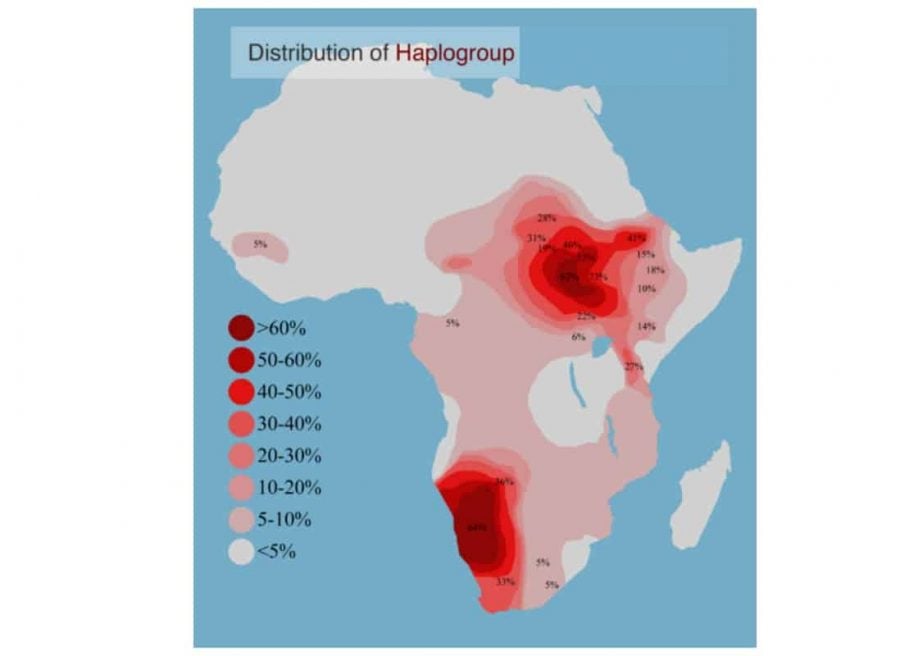
Sometimes the mutation is found in a very small population of people and can give more specific information. For instance, haplogroup N, which has the M231 mutation is found in northernmost Eurasia, specifically among the Uralic People. The current population of these people is around 26 million globally and today they can be found in Finland, Estonia, Scandinavia, Russia, and Hungary. They originated from a small population that goes back to the Stone Age in the 5th millennium BC that lived in a very specific area near the Volga River, west of the Ural Mountains. The M231 mutation can be traced back to this specific location and ancestry, regardless of where the people spread and passed on the gene mutation later on. This is a good example of just how specific some mutations can be and the level of information that can be obtained. For mutations that are more widespread, it is more difficult to trace it to a specific location, such as in this example.
The same would hold true if a mitochondrial DNA test found the marker on their mother’s side. They would know they had African ancestry on their mother’s side, but it gives them absolutely no information about their father side. This is one of the most important things to understand when ordering a family history DNA test kit and interpreting the results. You must know the type of test that was run and the implications of the results.
An interesting line is the L15 and L16 mutation. These mutations are found frequently and European populations. They are found infrequently in Middle Eastern populations, and are almost absent everywhere else. This is interesting if one considers how this mutation may have spread to the Middle East in small amounts during the time of the Crusades. This is one example of how history may have had an influence on your haplogroup group and specific genetic makeup.
If you have a certain mutation that connects you to a haplogroup, you have a common ancestor with everyone else who has that specific mutation. In some cases, for mutations that occurred early on in human history, this connection could even go back as far as the Stone Age or earlier. As people mixed and more mutations occurred, the human genome became more complex. Some mutations are only very recent migrations. As long as people move from one place to another and continue to intermix, the number of genetic mutations and variations, as well as the number of haplogroup’s will continue to grow too. The range of human diversity will continue to increase as well.
The names and information about haplogroups continues to change as scientists learn more information about where different haplogroup’s originated. The bigger the database, the more information is available, the more specific information can be gleaned from autosomal DNA testing. For instance, they have split and renamed several haplogroups over time as more information became apparent through data. The information and organization of this information is continually changing, largely as a result of becoming more specific in terms of where a group originated and how they spread. This means that over time, the ability to predict where someone is from and connect them to a certain single ancestor will become better the more people and information contribute to the database. This is another reason why the size of the database that the company uses is so important in determining their reliability and accuracy.
Are There Any Risks?
Many people are concerned about risks that may be inherent in DNA testing. In terms of physical risk, it only involves collection of a sample of your spit or rubbing a cotton swab on your cheek. The process itself involves little or no risk for most people. However, there are other risks involved that must be considered before deciding to send in a sample for testing.
Family secrets
Sometimes people have discovered secrets that others wished they had not through DNA test results. In some cases, the results have been disconcerting, for instance, people have found out they were adopted, or that they did not have evidence of an ethnicity of which they were certain. Test results have caused personal emotional trauma, family concerns, and in some cases, legal consequences.
There have been cases where people tried to claim benefits that were associated with membership to a certain ethnic group based on DNA claims. However, the precision of genealogy testing is not enough to claim a definitive percentage and membership to a certain group. It means that the mutations are present for that group, but the results of ethnicity percentages can be highly variable, especially from company to company. The results of these tests are meant to be a novelty and interesting but are not rigorous enough to be used as legal documentation to claim membership to any specific group.
Emotional Consequences
Some people have become quite upset and traumatized when they found out they did not have as much of a certain ethnic group as they thought. Genetic makeup can be different from one’s cultural identity. It can be upsetting if a person identifies with a certain cultural group and then finds out that their genes tell an entirely different story. This is one possible consequence that you must be prepared for if you decide to test your DNA.
Sometimes people have personal emotional attachments to a certain ethnic group. For instance, somebody they have always wished that they were Italian, French, German, or some other ethnic group. The test will reveal that they are not. This may cause the person to have an emotional crisis. For instance, it is possible for someone who believes themselves if they are very little to be African American based on their physical characteristics and culture to get a DNA test result that says they are 75% European. This is because the markers that are tested on really reflect a small percentage of our DNA. In the future, as more information about how human populations have mixed over the millennia, genealogy DNA testing and knowledge about haplogroup’s may change the way we think about ancestry and race, but that is quite another topic altogether.
As we have found out, they may still be from that ancestral origin, but the genes are not expressed in them clearly, or they are being overpowered by genes from other ethnic groups. How we identify socially and culturally is a different issue from our genetics, as DNA testing has revealed. Cultural identity is more about the traditions, stories, dress, foods we eat, and social interactions. It is considered are area of sociology, anthropology, and psychology rather that a part of genetics.
Genetics only addresses biology in determining ethnic origin and haplogroup. One should not get upset if their biology does not validate who they think they are. It does not strip the feelings and connection that one has to a certain group. When you understand how DNA works, it is easier to take the results with a grain of salt and not let it affect how you think about yourself or others.
Privacy Issues and DNA Testing
One of the main concerns about DNA and genetic testing that has been a topic of concern are that a privacy issues. Some of the companies offering these tests do not make their money from performing the test, not from selling the information to other companies as part of large genetic database. It is believed that a large percentage of the firms will sell your ancestry information and genetic information to another company. The problem is that you have no control over it once it is sold to someone else.
You may be wondering which companies would by your information and how they would use it. One of the main buyers of data on variations in the human genome are pharmaceutical companies. They use this data and information because certain drugs may function differently in populations that have a certain mutation. Companies will look for the frequency of these mutations in certain populations and areas of the world. This will allow them to develop it targeted drug therapies according to a person’s individual race, or genetic makeup. Pharmaceutical companies are using databases from genealogy testing so that they can develop more specific novel drug therapies based on the effects of these mutations on biology.
The next concern that you may have considered is what happens to your sample after the testing is done. You may assume that the sample is destroyed, but most the time this is not the case. A majority of the companies will keep your sample, for a certain amount of time, or perhaps forever, some of them also sell your actual saliva sample. This means that it’s not just your data, but your actual physical saliva that is being sold on the market.
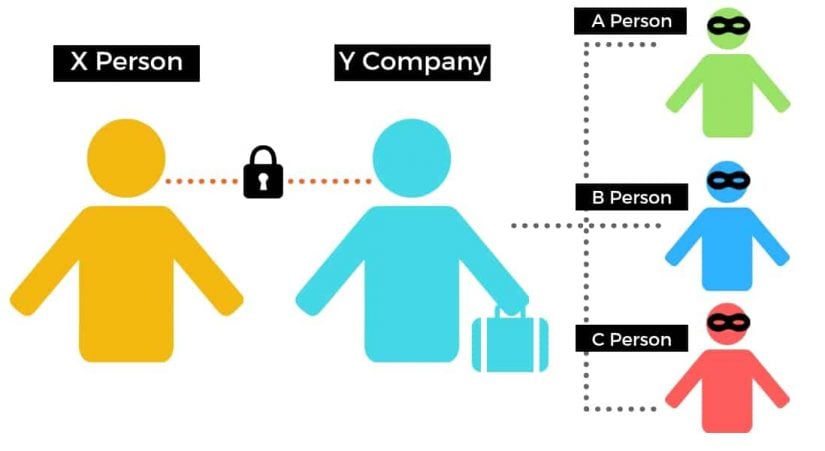
Currently, this is a hot field and there are many companies starting up and then being sold or going out of business. This means that any agreements you sign may not be valid when the company is sold or mergers. If you sign a permission that does not allow your DNA to be sold or data provided to a third party, this agreement may be invalidated when the legal structure of the company changes. You have no control over your sample or data if this happens.
It is essential to read the Privacy Policy of the company where you intend to send your samples. It is also important to understand the legal implications if the company should be sold or sells your information to a third party. Many of the company state that they will assign your data and number and make all of your private information anonymous. However, if the data is sold, there is a way to decode that and find the name associated with it.
Furthermore, some of these companies will give you the option of learning about other people that have the same SNP’s as you. They will give you a list of people who may be in your family tree. This gives you the opportunity to contact them, or they to contact you. Some people welcome this idea and the excitement of finding family members they never knew about. However, sometimes this has brought up questions and answers that people may not be ready for in their lives. You have to be prepared for family skeletons to be dug up and the potential for someone you never knew you do to contact you as a long-lost cousin. This is a consequence that many people do not realize when they send in their sample for testing.
It is important to understand the privacy policy of the company that you choose. You also have to consider all of the implications of that policy and how your data may be used or transferred to a third party in the future.
How Your Cousin’s DNA Kit Could Lead to You
One of the most disconcerting factors about DNA testing in general is that it is possible your genetic information may have already been compromised if anyone in your family has sent in a DNA test kit. This is especially true if that third cousin happened to send it in to one of the companies that did not make our list and that is known to share private information readily with others. How sending in your DNA test kit could impact others is another concern that you must consider.
In one case, police even used old DNA information to track down the Golden State killer. In this case, a DNA sample from the crime scene matched the DNA of one of the killers relatives that was found in a public database provided by a genealogy test site. By tracking down their relatives, they were eventually able to track down him as well.
DNA testing has become so important that labs are spending billions of dollars each year to research the best methods.
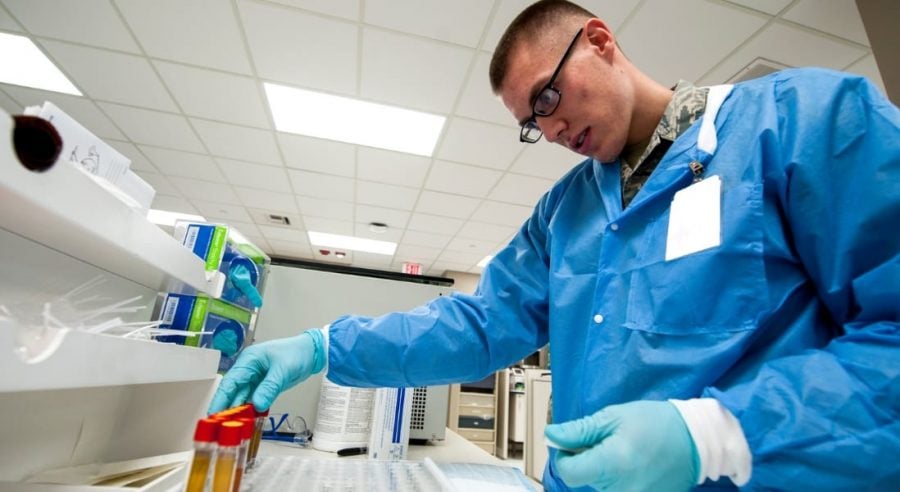
You may not think that this could happen to you, because police have sophisticated databases that are not available to the public. However, if you have ever googled your name, you know that there are many databases available on the Internet that can track you down and identify you by people you know, old addresses, and a host of other information. Almost all you need is a name and perhaps a place, and someone can find information such as your address, phone number, and even your Social Security number with a quick search on Google.
It was once asked how many Americans of European descent can be found using genealogy databases. The study concluded that nearly 60% of all Americans of European descent could be matched to a relative who was third cousin or closer. As more people submit their genetic information to genealogy databases the ability to track someone down using their cousins will become even better in the future. The top troubling factor is that this information is available to anyone, not just government authorities.
The ability to do this has inspired some dystopian writers to imagine a world for governments use DNA from antigovernment rallies to track down people who were in attendance. This seems like science fiction, but the ability to do this is closer than one might think with the growing databases of some of these genealogy websites.
The databases and the science behind it are still not good enough to immediately match DNA from your third cousin to you and use that information to track you down. It still requires quite a bit of work to get information about the right person. At present, it is possible to determine from genes whether the person had brown eyes or blue eyes.
Traits such as hair color can also be determined. If the authorities are looking for someone with brown hair and hazel eyes, and the genetic code says they are blue-eyed and blonde, they may be able to use this information to determine that they have the wrong person. In this way, if you are not the guilty party, this could be good for you because your genes say that you do not match the description of the criminal. At present, they are only able to determine some basic information, but this too will become more precise in the future.
One of the caveats of using DNA testing kits at the present measurement is that the databases of most companies at present contain mostly white Americans of European descent. This is simply because this is the demographic group that these test kits have appealed to the most. If you don’t have any ancestry of European descent, it is possible that police investigators would not be able to find you. However, this also has another implication when it comes to the test results. If you are not white and of European descent, or have ancestors who are, DNA testing companies may be less useful in being able to track down your relatives, or your relatives track down you.
The ability to be found or not found through genetic data found on genealogy test sites may or may not be a good thing, depending on your circumstances. The question is how much exposure you have if your cousin sends in a test kit and their DNA falls into nefarious hands. Genetic testing has found that on average one person has about 850 relatives who are a third cousin or closer. This means that you share a great-great-grandparent in common.
With this many cousins, the person would need quite a bit more information to actually track you down. However, this may be easier than it seems. For instance, if you are able to exclude either males or females, that cuts down the number by about 50% or so. Using other traits, this number can be narrowed down to within around 16 or 17 individuals in most cases. It is then possible to use this information to do a more detailed genetic analysis and come up with even more information about the person.
This is how police investigators use this information to track down criminals. It is a process of elimination. For instance, if police knew a little bit about your genetics and an approximate location where you live, they can eliminate about 90% of your cousins and come surprisingly close to tracking you down. Techniques such as Short Tandem Repeat (STR) only look at gene sequences that have to do with eye color, skin color, disease, hair color, or other physical traits that police are interested in. The companies that do genealogy DNA testing are not interested in these traits as much as just finding people who have a match. By matching DNA and stress tree data with STR data, police can come pretty close to finding someone using this cross referencing system by using only a small DNA sample from a crime scene.
This is all very interesting stuff, and the makings of some very good television series. When it comes to determining which DNA testing company to use, it is important to understand the potential for how this information can be used. This makes it even more important to read the privacy policy and do a little bit of vetting to make sure that the company you use can be trusted with your information. Keep in mind that law enforcement authorities often have the ability to subpoena this information without your permission to do so.
If any member of your family has ever submitted their DNA sample to one of these companies, then enough information is already out there to potentially track you down. If you happen to have a third cousin who is trying to hide from the law, even someone you do not know, submitting your DNA sample could lead law enforcement right to them. The bottom line is that there are implications for submitting your DNA sample that go beyond you. It can have an impact on those around you that is farther reaching than anyone would have ever imagined a decade ago.
Does Price Equal Quality?
One of the things you may be wondering is if price is an indicator of quality when it comes to the best DNA test kit. The short answer is no, and this is where you have to do your research carefully. Throughout this article, we have discussed the various differences in quality and factors that can affect it. Furthermore, you should have a good understanding by now of the way haplogroups work and SNP’s to influence your current genetic traits. You also know the ways in which genetic tests are analyzed in terms of the amount of information that is collected from the DNA sequence.
You know that the results can differ depending on whether the company uses why DNA from your father, mitochondrial DNA from your mother, or autosomal DNA that includes whole strand. You also know that the results can be affected by the number of sites that are tested along the DNA strand, how these testing sites are selected, and the source and type of database that the company uses to compare the results to.
By now you know that these factors have a significant impact on the results that are achieved, what they mean, and how they can be interpreted. In our research, we found that price was not necessarily connected to the company that can give the best results. As a matter of fact, we found some companies that were upwards of $200 and had the poorest quality and information provided. We found that price had little to do with the quality of the information that you received or the accuracy of the test. This is taking into account that there are over 40 companies out there and we attempted to check into most of them.
We found that some of the more expensive companies made promises that we did not feel they could back up. However, this does not mean that all of the companies that were more expensive provided poor quality results.

In some cases, the companies that were more expensive use more rigorous testing protocols and perform the more expensive autosomal testing, rather than just white DNA or mitochondrial. The bottom line is that you have to look carefully at what the company provides, their reputation, their testing methods, their database sources, and do quite a bit of research to determine if the high price is justified by what they offer.
The bottom line is that price tells you very little about the quality of the results and what the company offers. It takes quite a bit of research to find out if the price is worth the cost. In our findings, we found that some of the less expenses companies were actually our favorites. For instance, Ancestry is one of the least expensive, but they offer more information and have access to a larger database of people. This makes sense because they would entice more people to share their information and become part of their database by offering a cheaper price. Some of the lower-priced companies had a bigger database because they do a higher volume than those that are more expensive. This is not what one would expect when it comes to researching value for price, but it is exactly what we found when we were researching the best DNA test kit on the market.
How We Chose Our Best DNA Tests
Now you understand that price is not necessarily an indicator of the quality of the test and the information that you receive from it. This leads to the next question, which is what qualities you should look for and how we chose our top five best DNA test kits.
Based on independent research about the company, we narrowed down the number of companies that we wanted to use in our actual test to around 10. After that, several members of our team submitted their samples to these companies to see how well they worked, test their customer service, find out what was included in the report, and of course, take a look at how reliable we thought they were. After this process, we were able to come up with five top companies that we feel offer the best value for the money.
After that, we further narrowed down the list by reading the company’s privacy policy. We eliminated any that had weak privacy policies, or that flat out told you that they sold your data. We did as much research as possible into the companies and the genetic testing techniques that they use, as well as the size of their database. Some companies provide this type of information readily, while others took a little more digging.
Once we had located the companies that we thought were the most liable, it was then time to send in some DNA samples and see what types of results came back. The final list was based on the quality of information, ease of collecting the sample and sending it in, and the type of information that came back in the report. We used the criteria found throughout this DNA test product review. As you can see, deciding which family history genetic testing companies are the best takes a lot of research. That is why we have provided this review for you, so that you do not have to do all of the leg work yourself.
In our experience, the test results arrived for all of these companies in just a few weeks. However, the information that they provided was quite different.
Best 5 DNA Kits for Ancestry
Now that you understand how family tree genetic testing is conducted, and you understand how your own family tree DNA may have come into existence, it is time to look at some of the different kits that are out there and which ones we feel give you the best DNA test results.
Please note that the pricing information that is discussed is general and that where you live, where you buy the test from, and sales and discounts may affect the actual cost and make it different from that which we report. For instance, there are now some third-party companies that sell genetic testing kits at a marked up price. You will have to do your own research and find the best price.
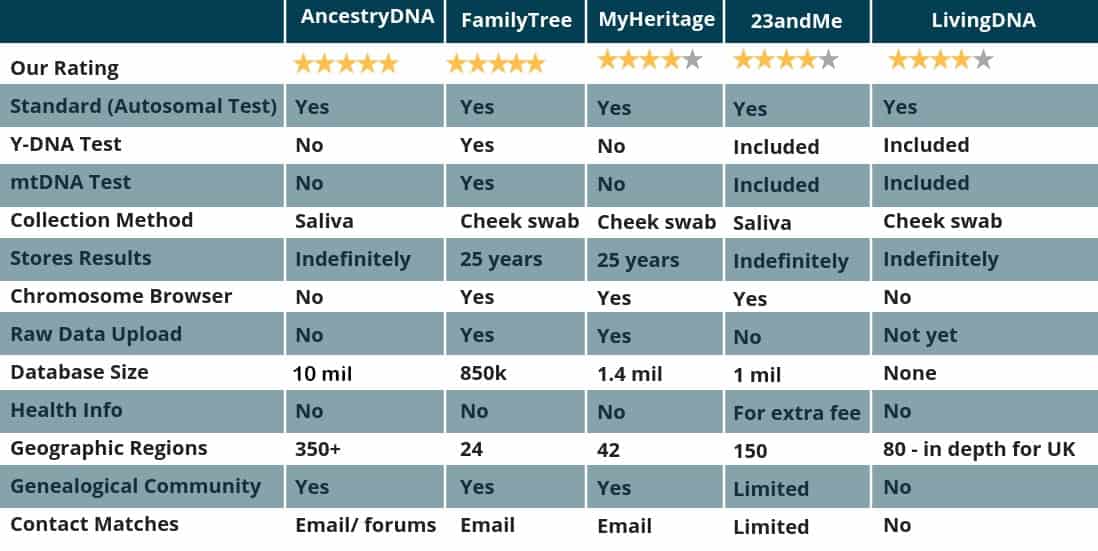
Ready to Become A Genealogy Junkie?
It is my hope that after reading this, you have a better understanding of DNA and how it is connected to your ancestry. Sending in a DNA test kit to find out about your ancestry is fun and exciting. However, as you now know, there are some caveats. You have to be prepared for a few surprises, and you also need to consider privacy information regarding having your DNA data available on the Internet.
If you have read through this review and are now ready to make the leap, are best DNA test picks are a good place to start. Frankly, after our investigation, these are the only services that we would even consider spending our money on. They represent the best in the business and from our experiences provided the most accurate and detailed information.
Some people want to have their DNA tested because they are serious about genealogy, while others just see it as a novelty and are hoping to have a little bit of fun in the process. We hope that at least everyone falls into the latter category at least to a certain degree. Perhaps one of the biggest drawbacks to having your DNA tested is that it is fine and can be addictive. Of course, this is what sites that sell subscription services are hoping for. Once you get a little bit of information, it makes you so curious that you have to spend the money to find out more. This is not a bad thing and opens the door to a fun and enjoyable hobby.
DNA testing and genealogy have become some of the world’s favorite hobbies.
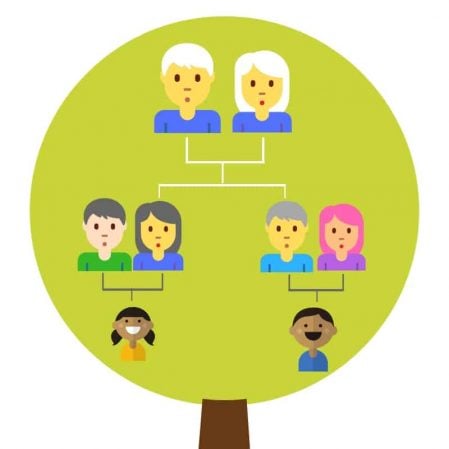
You never know what surprises you might find when you open the door to your own genetic code. You might find long-lost relatives, you might find out that you are connected to an ethnic group that you never suspected, or how much information you have in common with an important historical figure. If you are focused on finding out a certain type of information, this will guide your choice of services among the top five.
Maybe something in this article peaked your interest. For instance, maybe you want to find out how much Neanderthal DNA you have in your genetic code. After all, perhaps you have always suspected a certain resemblance in a certain family member. If this is the case, you want to choose the service that focuses on providing you detailed Neanderthal DNA information. In this case, 23&me would be the best choice.
However, if you happen to already know that you have a certain amount of ancestry from a certain region of the world, you need to choose your DNA testing company based on which one has the best information from that area of the world. For instance, a large number of people who have their DNA tested live in the United States and have at least some ancestry that migrated from Europe. This is especially the case if the family has been in the United States for the past 100 years or more. In this case, it might be interesting to try out LivingDNA or AncestryDNA because they have the largest databases for people in that area of the world.
If you have no idea where your ancestors came from, for instance if you were adopted, then MyHeritage or Ancestry may be your best choice because they have the largest databases from all over the world. Which of the top five best DNA tests you choose depends on what type of information you have and what type of results you are looking for.
Some of the sites that we reviewed provide a highly technical information and delve deep into the individual chromosomes in your genetic code. However, some of the information on these websites can be difficult to understand. Other websites present the information in a more general fashion, and they provide an enjoyable user experience and make the information easy to understand.
Of course, if you are already a hard-core genealogist, you will want the website that provide the most technical information and offer the most specific connection to family trees. If you have been researching your genealogy and come into a snag, DNA information can help you untangle your conundrum. It can also help to confirm or disprove the results of a genealogy records search. If you and your siblings have traced your ancestry and come up with two different versions, DNA may be the clue to deciding which one of you is right.
Finding out more about your ancestry and where you came from can be highly addicting. If you are ready to jump into this hobby and want to find out more about what makes you uniquely you, if we had to make a choice on the overall best performer, it would have to be AncestryDNA. While the other companies on this top five list have their merits and some of them are better in highly specific areas of information, we felt that Ancestry was by far the best value for the money.
The reasons for this are that it has the largest database, the largest number of family trees, and uses the largest number of markers to find matches. The accuracy and congruence of these test results with my own documentable family tree was remarkable. The results were spot on and traced the migration in exact match with historical documents and records. This is the biggest reason for choosing this company over the others. After I saw the results, I was convinced, and so were my colleagues. In our opinion the proof is in the pudding.
We were also impressed with the spot-on hit that was achieved from LivingDNA regarding my Scottish ancestors that go back to a certain area of Scotland. The migration from that area of Scotland to the United States occurred several hundred years ago and this DNA test pinpointed it almost exactly. However, even though this pinpoint information was great information to have, it was not connected to the ability to match it to an exact family tree, as with AncestryDNA. Once again, Ancestry wins based on the type and amount of information that is available from their database.
When it comes to choosing an overall winner, AncestryDNA beats all of the others hands-down. Sure, there are very valid reasons for choosing the other companies on the list. However, the purpose of this review was to find a top pick. There are many reasons for choosing Ancestry as our top pick over all of the others. There are many reasons why they have become a top genealogy database for serious researchers.
Many professional genealogists use information from their site to begin or confirm their own searches. They are one of the most trusted names when it comes to the accuracy and amount of information that is available on their website. Now, they have become an even better resource by adding the ability to tie and DNA information into the other results. We feel that this ability is unmatched in the other services.
If this is your first time and you are just beginning to explore the possibilities that DNA testing can provide in your search for where you came from, you might want to begin your search with one of the less expensive choices. However, there is nothing that says you cannot submit your sample to more than one company. This would have the advantage of giving you more information because of the different types of information that are available through the companies that were included in this review.
However, you must keep in mind the different methods of DNA evaluation and the differences in the database. If you choose to have your sample tested by more than one company, and you receive different results, it does not mean that you have to choose one as being completely correct over the other. It simply gives you a different perspective and view. You might want to start out sending your sample to one of the more inexpensive companies, and then retest it using one of the bigger databases with more information available, such as MyHeritage or Ancestry.
The main reason for delving into your family history using DNA is because it is a lot of fun. It is interesting to know how your ancestors have migrated through time to bring you to where you are today. It can make you feel a greater connection with your family and help solve some mysteries. It is fun when the DNA results match a family story. This is the main reason to go on a quest to find out more about your heritage through genetic testing. However, it is wise not to jump into it blindly.
It is my hope that this review has provided you the information that you need to make an informed decision and understand what the results can and cannot tell you. With this information in mind, it is my hope that you will embark on this quest and see what you might discover from your own genetic history.
Advertising Disclosure
Many or all of the companies featured provide compensation to us. These commissions are how we maintain our free service for consumers. Compensation, along with hours of in-depth research, determines where & how companies appear on our site.
Our Editor-In-Chief
Kush is the editor-in-chief at DNATestingGuides. He spends most of his time writing, editing, and fact-checking content to make sure that you’re reading the best source of consumer DNA testing info on the web. Kush worked in the genealogy space for many years, where he learned everything there is to know about consumer DNA testing.

He’s ultra-focused on getting the facts 100% correct, and consults DNATestingGuides’s genetics experts when a topic goes into complex scientific detail. Kush is excited to expand DNATestingGuides with more info, reviews, and videos in the coming months and years.

Find out what at-home DNA test kits can do for you and why you need one. Get a DNA test done to find out everything you ever wanted to know about your heritage.
Copyright 2024 © All rights Reserved. Design by Our Public Records